 Español
 Inglés
-
-
By Jesús M ª Valdaliso
The transition from sail to steam vessels and the crisis of traditional shipyards
The wooden shipbuilding industry which had a tradition for centuries in Vizcaya, after a depressing situation in the first three decades of the nineteenth century, enjoyed its last boom in the 1840s and 1850s, due to the trade revival and the maritime transport on one hand and the protection duty by the State on the other. The Basque Provinces were integrated to the Spanish Crown customs system. (más…)
-
Crews from the Marine Action Ships (BAM) and the Canary Security Unit (USCAN) visited the Repnaval shipyard in Las Palmas, Gran Canaria.
Both ship Officers and Marines visited the vessel Playa de Azkorri, which is currently being repaired at the shipyard. They checked security issues.
The visit was accompanied by the Captain. The vessel is a tuna fisher, similar to the ones operating in the Indian Ocean, where Operation Atalanta is taking place and where their vessels will be used In the near future.
This operation is organized by the Security Council of the UN to protect vessels of the World Food Program while bringing humanitarian help to Somalia.
Operation Atalanta is also authorized to deter, prevent and combat acts of piracy and armed robbery taking place off the coast of Somalia.
The Maritime Action Vessels – BAM – are designed to carry out military missions of conventional and unconventional character regarding threats. BAM conducts committed presence, surveillance and limited actions of neutralization, all within Maritime Safety regulations.
The Canary Security Unit – USCAN – is a component of the Marine Force Protection, with the mission of providing security to Navy staff and installations. The marine force protection is responsible for the area of the Canary Islands.
We hope their visit here will help them in their efforts to protect the Indian Ocean. Good luck.
-
With the desire to improve the training of our employees and therefore the service we provide to our customers, Nicol & Andrew moved to the Canary Islands to train our staff.
Originally founded in 1952, Nicol & Andrew was the first company of its kind to carry out in-situ machining and repairs on marine propulsion units such as diesel engines. The in-situ marine repairs allows a very rapid response and total dedication to getting the equipment back in running order in the minimum possible time.
For ten days a training has been conducted in our facilities enabling us to grind and polish crankpin in situ without dismantling and removing the engine crankshaft.
This saves time and cost and can repair 90% of damaged cranks. Currently our equipment allows for crankpin machining between 170-325 mm in diameter and 140-400 mm wide materials although for other measures, Nicol & Andrew would supply the necessary material.
If you need more information about this and others services, please contact us.
-
The European Commission has ruled that the new Spanish system for the early depreciation of the cost of certain assets acquired through finance leasing does not constitute state aid under EU rules, inter alia because it is not selective.
Joaquín Almunia, Commission Vice-President in charge of competition policy, said: “Following a long discussion, we have been able to approve a new finance lease scheme that is compatible with EU state aid rules on the basis of the latest proposals submitted by the Spanish authorities. This new, non-selective scheme will, in particular, make it possible to address the concerns of the Spanish shipbuilding sector without distorting competition in the EU Single Market”.
The scheme notified by the Spanish authorities makes it possible to deduct for tax purposes the cost of certain assets acquired through leasing as soon as their production begins, without having to wait for them to enter into commercial use. It therefore adds to the possibility already available to Spanish taxpayers of accelerating the deduction of such costs by reference to the payments made under a leasing contract.
The Commission’s investigation showed that the scheme does not constitute state aid under EU rules, since it does not favour some undertakings over others. The scheme applies to all types of tangible capital assets acquired through leasing, provided they are manufactured according to the purchaser’s technical specifications (goods which can be mass-produced are therefore excluded) and that it takes at least a year to produce them. Goods produce outside Spain are eligible in the same way as those produced in Spain. The measure is, furthermore, automatic and not subject to prior approval by the tax authorities.
Background
The previous version of the scheme for early depreciation of assets acquired through leasing is one of the tax measures, referred to collectively as the ‘Spanish Tax Lease System’ or Sistema Español de Arrendamiento Fiscal, which are currently the subject of an in-depth investigation by the Commission. The decision adopted today authorises application of the new early depreciation measure in the future. This decision is without prejudice to the conclusions the Commission may draw concerning the compatibility of the earlier version of the scheme.
Good news for Zamakona Yards and the shipbuilding sector in Spain.
Source: European Commission
-
Last week, in Zamakona Shipyard Bilbao, we layed the keel in the tuna purse seiner. The keel-laying certificate was issued by Bureau Veritas.
Echebastar Fleet SLU has entered into a contract with Zamakona Yards for a 1,900m3 tuna purse seiner, scheduled for delivery in January 2014. The investment will be about €30m which will be financed by the owner’s own resources as well as external financing, still to be defined.
This will be the first of a new generation of tuna vessels, designed and developed by Cintranaval-Defcar. The ship is equipped with the latest technology to detect fish, freezing systems and tuna handling.
The 88m long, 14m wide vessel will have a capacity for 1,900m3, and is arranged to transport up to 1,330t of tuna. The ship will be fitted with 20 cargo tanks (freezing and storage) for tuna. The fish catch will be frozen by brine pickle dive in the cargo tank, and then conserved dry frozen in the same tank.
“Building this vessel represents to Zamakona Yards a significant milestone in its history. We want to express our thanks to the directors board of Echebastar for the trust given to our yard, and confident that all expectations in this project will be fulfilled in excess”, says Pedro Garaygordobil, president of Zamakona Yards.
For this project, Echebastar and Zamakona have committed to use local suppliers as much as possible. The order will give a workload of about 350,000 hours, or two years, of guaranteed work for both.
-
Last August 29th, the European Commission published the Green Paper “Marine Knowledge 2020 from seabed mapping to ocean forecasting”.
This Green Paper opened a debate on the best strategy for moving forward to accessible, sustainable digital mapping of European seabeds, as well as timely information on the present and past physical, chemical and biological state of the overlying water column and forecasts for the future, together with a process that helps Member States maximise the potential of their marine observation, sampling and surveying programmes.
The European Commission, via Maritime Affairs, welcomes contributions from citizens, organisations and public authorities.
If you wish, you can also reply in an individual capacity. All contributions will be published on the internet although the names of those replying in an individual capacity will not be published. No contact details will be published.
The Commission has set up a website for responses. You can consult the Green Paper here, and you can leave your opinion in this poll. This website will be open till 15 December 2012.
This is a great chance to express your opinion about this matter in an open poll. Do not miss this opportunity.
-
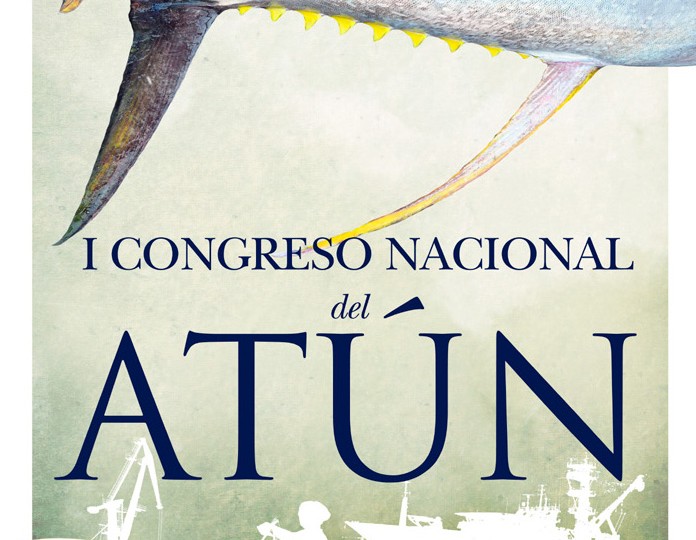
Zamakona Yards, along with others companies, will sponsor the celebration of the first conference organized by the Spanish tuna industry. We have vast experience in the construction of Fishing Vessels. Today, we are building a Live Fish Carrier for Solvtrans Rederi and a Tuna Purse Seiner Vessel for Echebastar Fleet.
Miguel Arias Cañete, Minister of Agriculture, Food and Environment will chair the inauguration of the first major National Congress of Spanish tuna industry which will take place in Madrid on 7th and 8th November. The event will address the challenges of the industry, both fishing and canning, from a scientific, technology, environmental, nutritional and historical perspective for highlighting its important economic and social dimensions.
The scientific coordinator of the meeting is José Luis Cort, researcher at IEO. Other prestigious international scientists like Victor Restrepo at the International Seafood Sustainability Foundation (ISSF) or Joshua Santiago, president of the Scientific Committee of the International Commission for the Conservation of Atlantic Tunas (ICCAT) will also participate. As well as the academic presence, representatives of leading companies and business associations linked to the industry will also attend (INTERATUN, OPAGAC, ANABAC-OPTUC, ANFACO-CECOPESCA and FEICOPESCA).
The Spanish tuna industry represents an annual economic volume of nearly 1,120 million euros, provides 18,600 direct jobs and 43,600 indirect and represents 70% and 67% of the activities of tuna fishing and canning in Europe. The activity is concentrated in Galicia and the Basque Country, which represent together 97% of the total.
The congress will be relate about history of tuna fishing and canning industry, sustainability in tuna fishing and processing, the socioeconomic impact of the tuna sector in Spain, nutritional and healthy consumption of canned tuna, the internationalization of Spanish tuna sector, the R&D+i in the tuna industry and about the prospects and challenges of future.
About INTERATUN
The Interprofessional Organization of Tuna (INTERATUN) is the first association formally established and recognized by the Ministry of Agriculture, Food and Environment in the field of fisheries.
INTERATUN includes tuna vessel owners and the processing industry and marketing of tuna, being represented in it others organizations, ANABAC-OPTUC and OPAGAC as represents of fishery industry and ANFACO and FEICOPESCA as processing and marketing industry.
Since INTERATUN started business in 2001, this organization has joined the efforts of freezer tuna fleet and the processing industry and marketing of tuna to defend common sectoral interests.
You can sign in the congress and stay informed in:
Web: www.atun2012.com – Twitter: http://twitter.com/Atun2012
Facebook: http://www.facebook.com/CongresoAtun2012
-
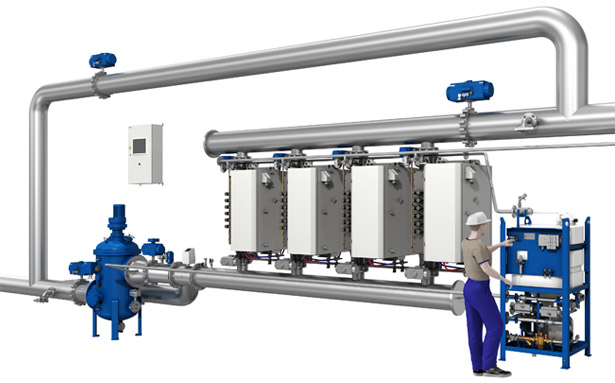
According to industry sources, 2012 will be the year that the Ballast Water Convention (BWM) will see ratication by IMO. Today, the total number of contracting Parties to the BWM Convention has reached 36, representing 29.07% of the world tonnage after ratification by Denmark (35% will be needed for the Convention to enter into force). In september 12th, IMO Secretary General – Koji Sekimizu urged a decisive action on ballast water. Eight years has passed since the Convention´s adoption.
Why is the BWC so important?
While ballast water is essential for safe and efficient modern shipping operations, it may pose serious ecological, economic and health problems due to the multitude of marine species carried in ships’ ballast water. These include bacteria, microbes, small invertebrates, eggs, cysts and larvae of various species. The transferred species may survive to establish a reproductive population in the host environment, becoming invasive, out-competing native species and multiplying into pest proportions.
This video filmed by Smithsonian Institution explains how scientists are trying to prevent invasive species from hitching a ride to new ecosystems aboard.
-
Since tomorrow, during two days, Zamakona Yards will attend to IADC Drilling Conference & Exhibition Africa 2012 in Lisbon.
The African continent has undergone sweeping geopolitical change over the last year. How will this affect one of the world’s leading E&P markets for well construction, spanning onshore activity, as well as shallow and deep water?
IADC Drilling Africa 2012 will explore all aspects of well construction in this vital region, including deepwater, emerging markets, HPHT, re-entry drilling for gas redevelopment, underbalanced and managed pressure operations, community development, training and competency, work force development, logistics, security and more.
Here, you can view the conference program. We will report on the main results and conclusions.
Author Archives: Administrador Zamakona




Zamakona Yards © 2015